
Given my incredibly youthful appearance and noted vigour, it may astonish you to learn that I am actually of an age that the next generation in my family is beginning to consider buying their first houses.
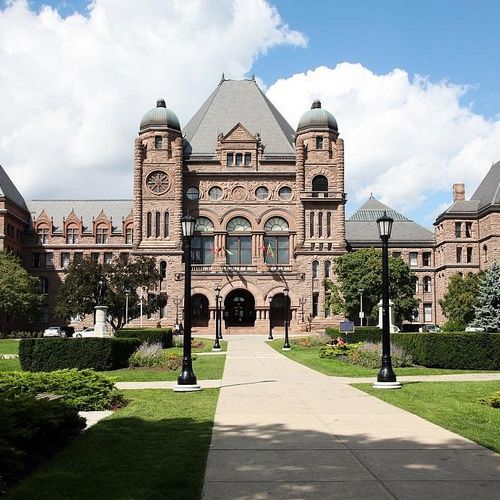
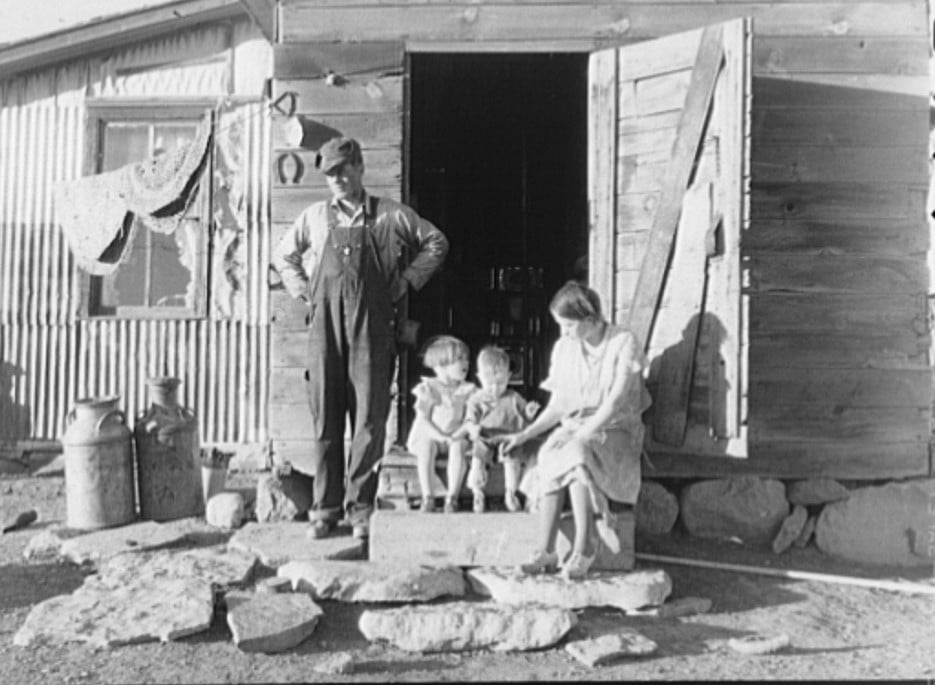
A niece, a nephew and a son - each in or soon to be in the market- are all convinced that what they face as first time buyers is far and away the worst it has ever been. (The photo above was a considered choice). The generation of grandparents in my family, eyes rolling, think of course it was far worse for them and kids today just need to stop whining, buying $7 lattes and start saving. So who’s right?
What I have done is look at what my parents faced in the early 1970s, what my wife and I faced in the early 2000s and what my son, nieces and nephews face in the mid 2020s
No family anecdotes and no snippy inter-generational aspersions. We are going to keep this post strictly to the facts from our friends at:
- Statistics Canada,
- The Bank of Canada,
- Canada Mortgage and Housing Corporation
- The Canadian Real Estate Association,
- The OECD
With that said, let’s see who had it the best and who had it the worst!
Generation One — My Parents, the Early 1970s
Brutal rates, but a house you could actually afford
When my parents bought, the average Canadian home ran about $28,000, roughly three times a typical household's income. That 3-to-4 times ratio had held for decades, and it held for them too. A single income could carry a house.
Then the 1970s happened. While the decade began with the promising start of my birth, things deteriorated rapidly. The 1973 oil shock lit a fire under prices, and inflation climbed from about 4% in 1971 to a peak of 12.9% in 1981. The Bank of Canada's answer was a sledgehammer: five-year fixed mortgage rates hit an astonishing 21.5% in 1981. Let that sink in the next time you are grumbling about 5%.
Here is the part people forget, though. It was painful, but affordability never actually broke. Home prices roughly tracked inflation, which roughly tracked wages. By 1981 prices had roughly tripled, and incomes had climbed right alongside them, so the house still cost a family in the neighbourhood of three to four times what they earned. My parents got mugged - yes politely so by a guy in a business suit but still a mugging- on the interest rate, but the price tag relative to their paycheque stayed sane. The advice I gave to my parents at the time was to consider that the pain was real but it was front-loaded, and once rates came down, anyone who had bought early was sitting on a very comfortable pile of equity.
Generation Two — Me, the Early 2000s
The last group to buy at a normal price
By the time my wife and I bought, inflation was tamed. The Bank of Canada's 1-to-3% target, adopted in 1991, was doing its job, and five-year fixed rates in the 5-to-7% range felt almost generous after what my parents had lived through.
In 2000 the national average home was around $163,000 against roughly $56,000 in household income, about 3.7 times. Close to the same ratio my parents faced thirty years earlier. I did not know it at the time, but I was just about the last cohort to buy in at a price that still made sense against a paycheque.
Underneath, the ground was already shifting like a 6-nil win for Canada in the World Cup. The OECD has documented that Canada's price-to-income ratio held in that steady 3-to-4 times band from 1980 to around 2001, and then took off. Cheap credit, rising demand and a building pace that never kept up did the rest. By 2010 the national average had more than doubled in a decade to about $340,000, and in Ontario it was higher still. Anyone paying attention could see where the line was pointed.
Generation Three — My Son, 2026
A different problem entirely
What my son, niece and nephews are walking into is not just pricier, it is completely different. The national average resale price now sits near $695,000, and here in Ontario, especially the GTA, it runs well above that. Incomes have not even come close to keeping up. On the numbers, a typical home now costs roughly 7 to 8 times household income nationally, more than double what either my parents or I faced. This of course before you get to Toronto.
Say you want to put down the full 20% and skip mortgage insurance. On a $695,000 home, that is about $139,000 in cash, for most households more than a full year’s gross income, saved up before you have paid a single dollar toward the mortgage itself. And that assumes you could somehow bank every cent you earned. (As a quick aside, some folks whom I'd asked to proof this article before posting questioned this. To be clear here's the link: https://www150.statcan.gc.ca/n1/daily-quotidien/260429/dq260429a-eng.htm) )
In the real world you are saving it while paying rent, which stretches the job into years. CMHC has flagged that the cities where prices are worst are also where rent eats the biggest share of income. That is the trap: you cannot save the down payment because the rent that is supposed to let you save is itself unaffordable. And here is the stat that, to me, says everything. Adjusted for inflation, Canadian wages have grown about 20% since 1990. Real home prices over the same stretch are up about 195%. Your earning power crept forward; the finish line sprinted away
There is some good news, and I always tell buyers not to lose sight of it. The Bank of Canada has cut its way down to a 2.25% policy rate and has now held there five times running as of June 2026.holding rates back a world away from the 2023 highs and a different planet from my parents' 21.5%. (For those of you who prefer Fixed Rates see: https://terryriddoch.ca/how-the-bond-market-drives-fixed-rates-in-ontario/ ) CMHC expects prices to stay roughly flat through 2026 before resuming growth in 2027 and 2028. For a patient buyer, flat prices plus steadier rates is not the worst window to be planning in.
The International Picture
Canada is not alone, but we are near the front of the pack
Plenty of countries are wrestling with housing costs. The uncomfortable part is how far up the list we sit. The OECD ranks Canada as having the worst deterioration in the price-to-income ratio among 13 comparable countries since 2004, a rise of more than 80 index points. The United States saw about 31 points over the same period. Germany actually improved after 2022 as incomes outran prices.
Australia looks a lot like us: fast population growth, tight supply in the big cities, relentless demand. The UK has its London problem. Germany is the interesting outlier, with heavy investment in purpose-built rental, strong tenant protections, and a culture that is genuinely fine with renting, all of which have kept things comparatively calm.
The lesson from every one of these comparisons is the same, and it is not complicated: supply is the long-run answer. The places that built more homes, more densely, faster, with fewer hoops, have better affordability. That is the whole ballgame behind Ontario's housing debate, and it is what the province is chasing with measures like the More Homes Built Faster Act.
So, Who Actually Had It Worst and Best?
So let's take a look:
- My parents had it hardest on the monthly payment. Those rates were genuinely brutal. My friend and colleague Brian Guerriero (Re/Max Muskoka if interested) once described that period as buying a house on your credit card. No 4 or 5% interest rates there. But... the house itself was cheap against their income, about 3 times, so a single earner could swing it, and the moment rates fell their equity looked terrific. Sharp, but temporary, pain followed by decades of gains. Not bad in retrospect.
- My generation, if I am being honest, got the best deal of the three, and it is not even close. We bought at a sane price, about 3.7 times income, with rates that fell year after year, and then rode two decades of extraordinary appreciation. Anyone who bought in Ontario between roughly 1996 and 2005 and simply held on has likely seen their place triple or quadruple. A reasonable entry price, improving affordability every year, and enormous long-run gains: that combination is not coming back any time soon.
- My son's generation has it worst on the thing that matters most, getting in the door. At 7 to 8 times income, the house is more than double the relative cost my parents or I ever faced. The down payment is a multi-year project on its own, and they are trying to save it while paying some of the highest rents in the country. Rates are friendlier than 2023, sure, but nowhere near the pandemic lows that briefly made big prices digestible. And the OECD agrees with him: among comparable economies, Canada had the worst affordability deterioration since 2004. Ouch Son!
So if you are scoring it: my parents had the hardest monthly payment, my son has the hardest entry, and my generation had it best. What's really going to tick some people off, is that my generation easiest path also got the biggest reward. Thank you everyone else for participating!
About the Author: Terry Riddoch, Ontario Multi-Family and Commercial Real Estate Broker
 Terry Riddoch is a licensed Ontario real estate broker with Re/Max Real Estate Centre, based in Waterloo Region and specializing in multi-family and apartment building sales across Ontario. With 19 years of experience and over $90 million in closed transactions, he advises independent landlords, private investors, and national investment groups on buying, selling, and valuing apartment buildings, investments and development land across the Province of Ontario including Waterloo Region (Kitchener, Waterloo and Cambridge), Guelph, Brantford, Hamilton, London, Milton, Windsor, Kingston, Belleville, Brockville and Sudbury.
Clients know Terry for candid advice, data-driven analysis, and doing the work well ahead of the deal. He writes regularly on Ontario landlord rules, rent control, the Landlord and Tenant Board, and housing policy to help property owners make informed decisions.
Thinking about selling an apartment building, or looking for your next investment property? Call Terry at (519) 591-1725, email [email protected], or visit terryriddoch.ca for a confidential, no-obligation conversation about your property.
Check out this article next