

The following is an analysis of multifamily property data spanning January 2024 to mid-February 2026. It reveals a nuanced market where buyers are gaining leverage, institutional capital is shifting, and operational fundamentals remain robust despite softening rent growth.
Transaction Dynamics
Over the analyzed period, the market saw a total sales volume of $416 million across 47 sales, encompassing 2.4K units. The average sale price settled at $8.8 million, translating to roughly $266,551 per unit.
However, the most telling metric for brokers and investors is the growing leverage on the buy side. The average sale-to-asking-price differential was -17.6%, with extreme ranges stretching down to a 30% discount. Furthermore, liquidity has slowed, with properties taking an average of 8.2 months (or 248 days) to close. For sellers, pricing accurately from day one is more critical than ever, while buyers have a clear window to negotiate favorable entries.

Yields and Cap Rates
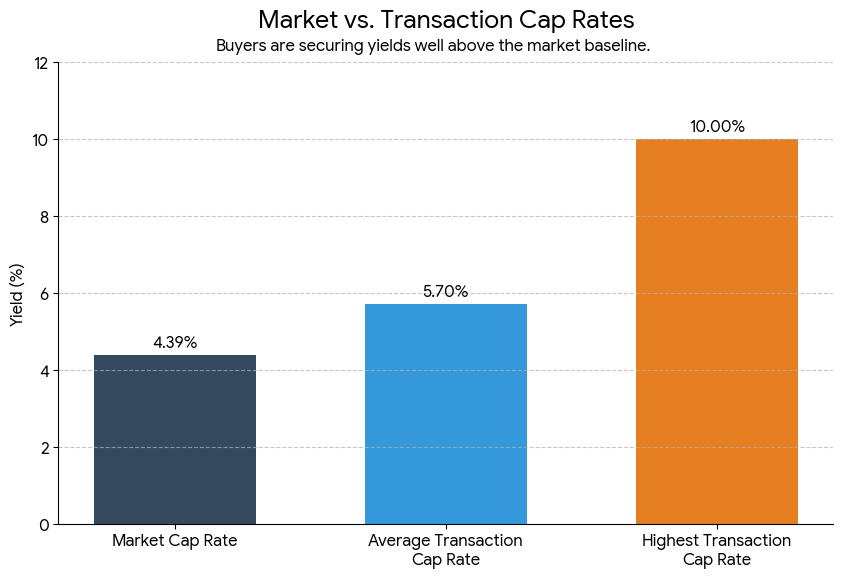
In terms of returns, the average transaction cap rate stood at 5.7%, though individual deals varied widely from 4.0% up to 10.0%. Interestingly, this average transaction cap rate is notably higher than the overall market cap rate, which hovered tightly around 4.38% to 4.39%. This spread suggests that the assets actually trading hands are either offering higher yields to offset risk or buyers are successfully negotiating prices down to achieve better-than-market capitalization rates.
For an explanation of how market caps differ from transaction caps in the context of London, please see this post here: The Difference Between Market and Transaction Cap Rates: London ON
Capital Flows: Who is Buying and Who is Selling?
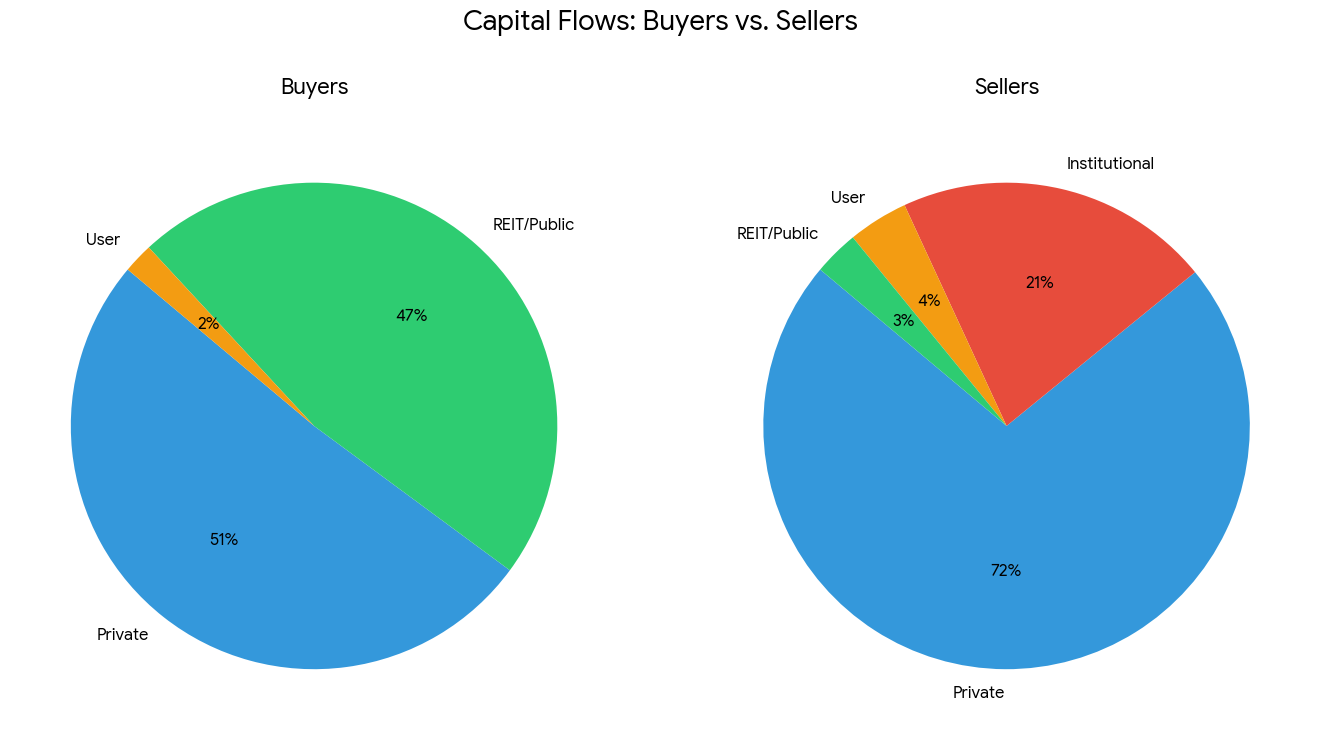
The data highlights a distinct shift in ownership profiles. Private capital remains the bedrock of the market, accounting for 72% of the sales volume on the disposition side and 51% of the acquisition volume.
However, the institutional and public sectors are telling two different stories:
- Net Sellers: Institutional investors made up 21% of the total sales volume but were virtually absent on the buy side, making them significant net sellers in this cycle.
- Net Buyers: Conversely, REITs and public entities represented 47% of the buying volume but only 3% of the selling volume, indicating a strong acquisition appetite from public capital.
Additionally, the vast majority of capital staying in the market is domestic, with national buyers driving 89% of the sales volume, compared to just 5% from foreign investors and 6% from local buyers.
Market Fundamentals: Strong Occupancy, Softening Rents
On the operational front, property managers and operators are maintaining incredibly tight occupancies, with typical ranges between 96.63% and 97.44%. The average vacancy rate at the time of sale was just 5.1%.
Despite these strong occupancy levels, landlords are losing pricing power. Asking rent growth has turned negative, falling between -2.4% and -4.8%. Market rent per unit currently sits between $1,929 and $2,018. This juxtaposition of high occupancy and negative rent growth suggests that operators are prioritizing tenant retention and stabilized cash flows over aggressive rate hikes.
Strategic Outlook
For multifamily professionals, the 2024–2026 data paints a clear picture. While high occupancy rates indicate that tenant demand is fundamentally secure, negative rent growth means value-add strategies must be underwritten conservatively. Buyers currently hold the pricing power, securing nearly 18% discounts off asking prices, making this an opportune moment for well-capitalized private investors and REITs to expand their portfolios. Sellers, particularly institutional players looking to offload assets, must be prepared for longer marketing periods and intense negotiations.
Discuss Your Next Real Estate Move.
 The multifamily market is shifting rapidly, and having the right data is only half the battle—executing the right strategy is what drives returns. Whether you are looking to expand your portfolio, underwrite a new opportunity, or list an existing asset, I am here to help you navigate the market with confidence.
Check out this article next