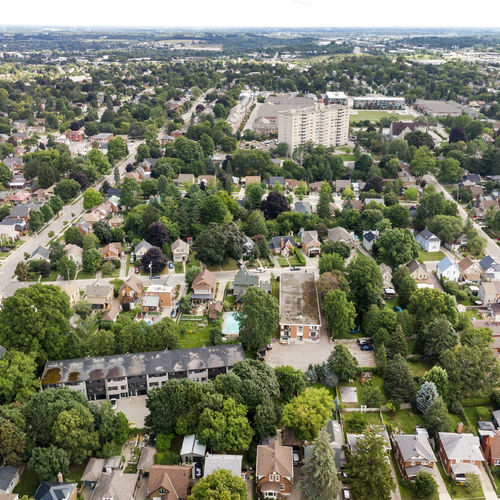

As most of you are now aware, the Region of Waterloo has formally identified a water capacity constraint within the Mannheim Service Area, affecting the municipalities of Kitchener, Waterloo, and portions of Cambridge, Woolwich, and Wilmot. While residential water quality and current consumption remain unaffected, the constraint has triggered immediate procedural changes regarding development approvals and servicing agreements.
(The Region, it should be noted for further context, operates a second service area called the Middleton Service Area which does not suffer from a similar constraint).
For stakeholders in the real estate and development sectors, the following is a brief overview of what is happening and, more importantly, what is being done to address this frankly alarming situation.
The Core Constraint: The “20% Resiliency” Methodology
The first thing you need to understand is that the current deficit is not solely the result of an actual physical resource depletion but is largely driven by a prudent shift in risk management policy. Historically, the Region’s water systems have operated near peak capacity (up to 96%), leaving minimal margin for error.
In an effort to bring the Region in alignment with best practices for groundwater-based systems, Regional staff have adopted a revised methodology that mandates a 20% Operational Resiliency Buffer. This buffer ensures sufficient capacity remains available during emergency shutdowns, spills, or planned maintenance without compromising system integrity. On the surface this would appear to be a prudent move on the part of the Region.
The Impact on Available Capacity:
• Total Sustainable Capacity: 1,455 litres per second (L/s).
• Adjusted Capacity (minus 20% buffer): 1,164 L/s.
• Current System Demand: ~1,356 L/s.
By enforcing this 20% safety margin, the Mannheim Service Area is effectively operating in a deficit relative to current demand. Consequently, the Region has stated it cannot support new development applications or enter into new servicing agreements that would add load to this specific service area.
Engineering Bottlenecks: The “Island” Effect
The Region acts as a complex "Integrated Urban System," yet it faces internal distribution challenges. While the Middleton Service Area (South Cambridge) currently holds a water surplus, this capacity cannot be immediately transferred to the Mannheim Service Area.
This lack of integration is due to two primary technical constraints:
- Hydraulics: Differing pressure zones prevent simple transfer.
- Chemical Incompatibility: The two service areas utilize different disinfection methodologies. Mixing these water sources results in water quality degradation (specifically taste and odour issues).
Until new infrastructure is commissioned to harmonize these systems, the Mannheim Service Area must function as an isolated utility "island" that is currently oversubscribed.
Regulatory Implications: The "Holding Provision"
While the Region of Waterloo is a commenting agency, local municipalities (City of Kitchener, City of Waterloo) remain the approval authorities. However, the lack of Regional water servicing has introduced a new regulatory condition for active files.
Recent proceedings in the City of Kitchener illustrate the path forward: Council may approve zoning amendments but will apply a Holding Provision (“H”) to the title.
- Effect: The "H" symbol serves as a regulatory lock. While it grants land-use permissions, it prohibits the issuance of building permits until the Region confirms that water capacity is available to service the site.
- Risk: Lenders and equity partners must account for indefinite timelines on the lifting of these provisions, which introduces liquidity risk to land acquisitions.
Note: The Region has confirmed that issued building permits (approx. 6,000 units as of year-end 2024) will not be revoked and construction may proceed.
Remediation Timelines and Capital Planning
The Region has released a preliminary schedule of infrastructure projects designed to address the deficit. Investors should distinguish between projects that restore the safety buffer and those that enable net new growth.
- Short-Term (2026–2027): Operational Restoration Projects such as the Wilmot supply reallocation and Greenbrook facility repairs are prioritized to restore the 20% operational resiliency buffer. These are risk-mitigation measures rather than growth-enabling projects.
- Long-Term (2030–2031): Structural Solutions The critical critical path to lifting the moratorium on new connections lies in the Briardeen Pumping Station (Cam 2W). This infrastructure will resolve the chemical and pressure incompatibilities, allowing the transfer of surplus water from Cambridge to Kitchener. Current estimates place the in-service date for this project at 2030 or 2031.
Strategic Outlook
The introduction of the 20% contingency rule represents a structural reset in how Waterloo Region manages development capacity. For the next 3 to 5 years, water servicing will likely remain the primary constraint on new supply in the Mannheim Service Area.
Stakeholders are advised to audit current land positions for "Holding Provision" risks and to engage directly with Regional engineering staff regarding the specific capacity status of their application queues.
Check out this article next